
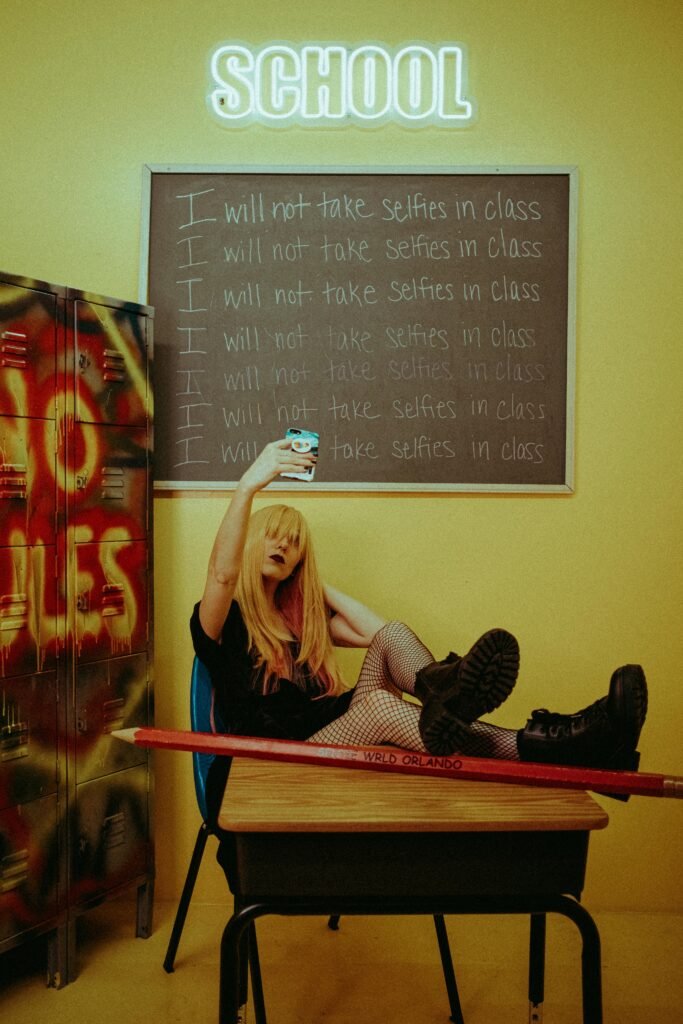
The rise of Instagram transformed the way we see ourselves—literally. What started as a platform to share moments has become a stage where identity, aspiration, and perception are curated pixel by pixel. Selfies are no longer casual snapshots; they’re statements, stories, and sometimes even strategies.
Today, the selfie is a cultural currency, and Instagram is its marketplace.
Where Selfie Culture Began
Self-portraits have existed since ancient art—from kings engraved in stone to painters framing themselves as heroic subjects. But the smartphone democratized self-portraiture.
For the first time in history:
- Everyone could be the subject and the artist
- Identity could be shaped instantly
- Validation could be quantified—likes, shares, comments
The selfie is not vanity—it’s visibility in a world where many feel unseen.
Why People Take Selfies
Behind every selfie is a reason, even if unspoken. The motivations are deeply psychological:
| Motivation | What it communicates |
|---|---|
| Belonging | I am part of something |
| Confidence | I feel good and want to express it |
| Recognition | I want to be acknowledged |
| Storytelling | This moment matters |
| Aspirational identity | This is who I want to become |
| Control | I decide how I am perceived |
A selfie isn’t just an image—it’s a negotiation between self and society.
Instagram as the Engine of Self-Validation
Instagram built an entire ecosystem around representation. Features like filters, editing tools, face enhancements, and now Reels have pushed the culture toward a polished visual language.
What Instagram Amplified
✔ Performance over presence
✔ Aesthetic over authenticity
✔ Comparison over contentment
✔ Influence over introspection
The platform rewards attention mechanics—virality, trend participation, and engagement loops, pushing users to present a perfected life rather than a real one.
The Double-Edged Sword
Selfie culture is not inherently good or bad—it just is. Its impact depends on how we engage with it.
Positive sides
✨ Boosts confidence & creative expression
✨ Helps build personal and professional brands
✨ Creates communities of shared identity
✨ Encourages storytelling through visuals
Negative sides
⚠ Obsession with perfection & comparison
⚠ Dependence on external validation
⚠ Body image anxiety and filter dysmorphia
⚠ Pressure to constantly perform socially
The danger isn’t in the selfie—it’s in losing ourselves in the reflection.
Selfies as the New Language of Influence
Today, selfies drive:
- Fashion trends
- Fitness aspirations
- Beauty standards
- Travel & lifestyle decisions
- Consumer purchasing behavior
Influencers and brands use selfies strategically to build relatability and authenticity. People don’t trust ads—they trust faces. We buy what we see people we admire using.
Selfies have turned ordinary individuals into micro-celebrities and self-made brands.
The Future: From Selfies to Digital Avatars
With AI tools, AR filters, and virtual influencers, identity will evolve even further. The next wave might replace real faces with hyper-real digital ones.
We’re entering an era where:
- Your selfie may not be you
- Your avatar may be more liked than your real self
- Influence may be algorithmically engineered
This raises the real question:
Are we shaping technology, or is technology shaping us?
Conclusion
Selfie culture on Instagram is a cultural mirror. It reflects:
- What we value
- What we aspire to become
- What we fear we are not enough of
The challenge is to take control of the reflection—to use selfies to express, not prove; to connect, not compare; to celebrate, not perform.
Because in the end:
A picture may say a thousand words, but the eyes behind the camera tell the truth.